

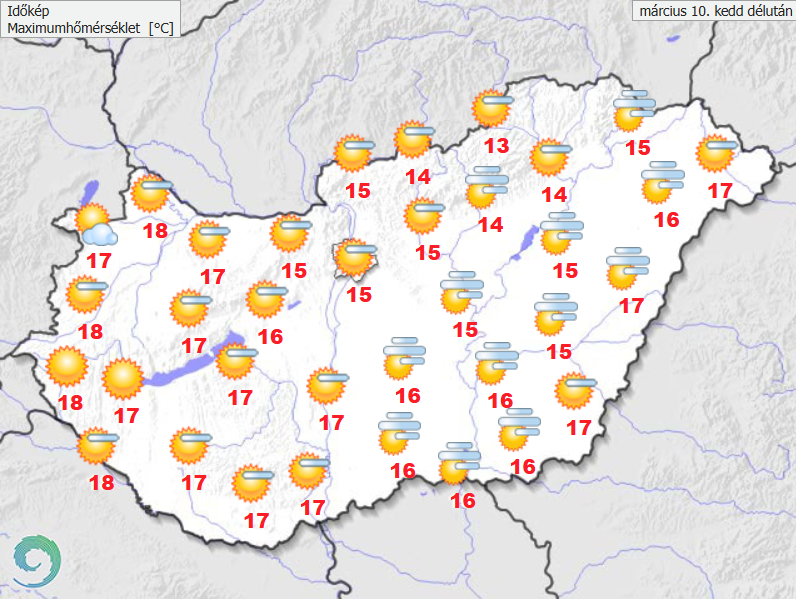
Weather affects almost every decision we make throughout the day. From choosing appropriate clothing to planning travel, outdoor events, sports activities, farming operations, and business schedules, tomorrow’s weather forecast plays an essential role in helping people prepare ahead of time. The Hungarian keyword holnapi időjárás, meaning “tomorrow’s weather,” is one of the most searched weather-related phrases because people want accurate information before the next day begins. Modern forecasting technology has significantly improved over the past few decades, making short-term weather predictions more reliable than ever before. Weather agencies now use satellites, Doppler radar, automatic weather stations, aircraft observations, weather balloons, and advanced numerical prediction models to provide detailed forecasts that are updated several times a day. Short-range forecasts covering the next 24 hours are generally the most accurate because they rely on the latest atmospheric observations and continuously refined computer simulations.
Although tomorrow’s weather forecasts are highly dependable, weather remains a naturally dynamic system influenced by countless atmospheric variables. Small changes in temperature, humidity, wind direction, or air pressure can sometimes alter local weather conditions within hours.holnapi időjárás This is why meteorologists continually monitor new observations and update forecasts whenever necessary. Understanding how forecasts are created, what information they include, and how to interpret them allows users to make smarter decisions while recognizing the natural uncertainty that always exists in weather prediction.
Understanding the Meaning of Holnapi Időjárás
The phrase holnapi időjárás simply refers to tomorrow’s weather forecast. While the translation is straightforward, the information behind the forecast is remarkably detailed. Rather than simply stating whether it will be sunny or rainy, modern forecasts provide comprehensive details about expected temperatures, precipitation probability, cloud cover, humidity, atmospheric pressure, wind speed, wind direction, UV radiation, sunrise and sunset times, and even air quality or pollen levels in many locations.
People search for tomorrow’s weather for many different reasons. Commuters want to know whether rain will affect traffic, parents need information before sending children to school, travelers check road conditions, farmers depend on rainfall forecasts, and outdoor enthusiasts plan activities based on expected weather conditions.holnapi időjárás Because tomorrow’s forecast focuses on only the next 24 hours, it provides enough detail to support practical decision-making while maintaining a high level of forecasting accuracy.
How Meteorologists Predict Tomorrow’s Weather
Creating a weather forecast involves gathering enormous amounts of atmospheric data from around the world. Weather satellites continuously observe cloud movements, storm systems, ocean temperatures, and atmospheric moisture.holnapi időjárás Ground weather stations measure temperature, humidity, rainfall, wind, and air pressure every few minutes. Weather balloons launched twice daily collect valuable information from different layers of the atmosphere, while aircraft contribute additional observations during flights.
After collecting this information, meteorologists use sophisticated numerical weather prediction models running on powerful supercomputers. These models solve millions of mathematical equations that describe how air moves through the atmosphere.holnapi időjárás They simulate the interaction between temperature, moisture, wind, and pressure to estimate future weather conditions. Because tomorrow’s forecast covers only a short period, these models usually perform exceptionally well. Meteorologists also compare several forecasting models before issuing the final forecast, improving overall reliability.
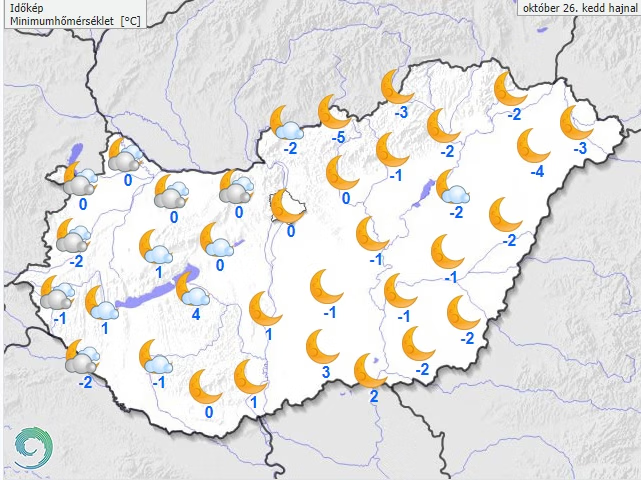
A complete tomorrow weather forecast contains much more than a simple temperature prediction. Daily maximum and minimum temperatures help people prepare appropriate clothing and schedule outdoor activities during the most comfortable hours.holnapi időjárás Hourly forecasts provide additional detail by showing how temperatures change throughout the day, making it easier to plan work, travel, or recreational activities.
Rainfall prediction is another essential component. Instead of simply stating whether rain is expected, forecasts often include the probability of precipitation, estimated rainfall amounts, and the most likely timing of showers or thunderstorms.holnapi időjárás holnapi időjárás Wind forecasts describe expected wind speed, gusts, and direction, which are important for transportation, aviation, boating, cycling, and outdoor events. Additional information such as humidity, visibility, atmospheric pressure, UV index, and cloud cover helps create a complete picture of tomorrow’s expected weather conditions.
Why Tomorrow’s Forecast Is Usually More Accurate Than Long-Term Predictions
Forecast accuracy decreases as the prediction extends further into the future. Tomorrow’s weather forecast benefits from the latest atmospheric observations, allowing computer models to begin with a highly accurate representation of current weather conditions. Since relatively little time passes before the forecast period, there are fewer opportunities for small forecasting errors to grow into major inaccuracies.
Weather systems, however, remain inherently chaotic. A slight change in wind direction, moisture content, or storm development can alter local conditions, especially during unstable weather. Thunderstorms are particularly difficult to predict because they often develop rapidly and affect only limited areas. For this reason, meteorological agencies continuously update forecasts throughout the day, ensuring users receive the most accurate information available before tomorrow arrives.
The Importance of Hourly Weather Forecasts
Hourly weather forecasts have become increasingly valuable because they provide much greater detail than traditional daily summaries. Instead of knowing only that rain is expected tomorrow, users can identify exactly when precipitation is most likely to begin and end. This information helps commuters avoid heavy showers, event organizers adjust schedules, and travelers choose the safest departure times.
Temperature changes throughout the day are equally important. Morning temperatures may require a jacket, while afternoon sunshine could create much warmer conditions. Wind often strengthens during the afternoon and weakens during the evening, affecting cycling, boating, and outdoor construction work. By examining hourly forecasts alongside the daily summary, users gain a much clearer understanding of tomorrow’s expected weather pattern.
Local Weather Conditions Can Vary Significantly
Although national weather forecasts provide a useful overview, local geography often creates significant differences in weather conditions. Mountains, lakes, rivers, forests, and urban environments all influence temperature, rainfall, and wind patterns. A city may experience sunshine while nearby rural areas receive thunderstorms only a few kilometers away.
Modern forecasting services therefore produce highly localized forecasts for individual towns and neighborhoods. Radar observations detect developing rain clouds in real time, while high-resolution weather models simulate local terrain effects more accurately than ever before. These improvements allow users to receive forecasts tailored to their specific location rather than relying solely on broader regional predictions. This localized approach greatly improves the usefulness of tomorrow’s weather forecasts for daily planning.
Factors That Can Cause Forecasts to Change
Many people notice that tomorrow’s weather forecast sometimes changes between morning and evening updates. This does not necessarily indicate poor forecasting but rather reflects the continuous arrival of new observational data. Every few hours, weather stations, satellites, radar systems, ships, aircraft, and weather balloons collect fresh measurements that improve computer model accuracy.
Rapidly developing weather systems are among the most challenging situations for meteorologists. Cold fronts, warm fronts, thunderstorms, sea breezes, and mountain winds can evolve quickly, causing localized weather changes that earlier forecasts may not have fully anticipated. Meteorologists analyze these developments continuously and adjust forecasts whenever newer information suggests a different outcome. This updating process helps maintain the highest possible forecasting accuracy.
How Tomorrow’s Weather Supports Different Industries
Reliable tomorrow weather forecasts are essential across numerous industries. Agriculture depends heavily on rainfall predictions, frost warnings, and temperature forecasts to protect crops and schedule irrigation, harvesting, and planting. Construction companies monitor wind, rain, and temperature forecasts before organizing outdoor work, while transportation providers adjust schedules to account for severe weather conditions.
Tourism also benefits enormously from accurate short-term forecasts. Hotels, outdoor attractions, parks, beaches, and recreational facilities use tomorrow’s weather information to prepare staff and inform visitors about expected conditions. Aviation and maritime operations rely extensively on wind forecasts, visibility predictions, and storm warnings to ensure safe operations. Even energy providers use weather forecasts to estimate electricity demand during extremely hot or cold conditions, demonstrating how weather prediction supports modern society far beyond personal daily planning.
Weather Technology Continues to Improve
Weather forecasting has advanced dramatically due to improvements in observation systems and computing technology. Modern satellites provide high-resolution images every few minutes, allowing meteorologists to monitor cloud development almost continuously. Doppler radar detects precipitation intensity and storm movement with remarkable precision, improving severe weather warnings and rainfall predictions.
Artificial intelligence and machine learning are becoming increasingly valuable tools in weather forecasting. These technologies help identify forecasting patterns, reduce model errors, and improve local predictions by analyzing enormous amounts of historical and real-time atmospheric data. Future forecasting systems are expected to provide even greater accuracy, faster updates, and more personalized forecasts based on individual locations and activities. As computing power continues to increase, tomorrow’s weather forecasts will likely become even more detailed and dependable.
Conclusion
Checking the holnapi időjárás has become an important daily habit because accurate short-term weather forecasts help people make informed decisions before the next day begins. Whether planning travel, commuting to work, organizing outdoor events, farming, exercising, or simply deciding what to wear, tomorrow’s forecast provides valuable information about expected temperatures, rainfall, wind, humidity, cloud cover, and other atmospheric conditions. Thanks to continuous advances in satellites, radar technology, numerical weather prediction models, and artificial intelligence, today’s short-range forecasts are more reliable than ever before.
Although no forecast can predict every atmospheric change perfectly, tomorrow’s weather forecast offers one of the highest levels of accuracy available in meteorology. By checking updated forecasts regularly and understanding the information they provide, individuals and businesses can better prepare for changing weather conditions while minimizing disruptions. As forecasting science continues to evolve, the value of reliable holnapi időjárás information will only continue to grow, helping people make safer, smarter, and more confident decisions every day.
