

Introduction to Wisconsin Election Results and Why They Matter Nationally
Wisconsin election results are among the most closely watched in the United States because the state consistently plays a decisive role in presidential, Senate, and congressional outcomes. As a classic swing state, Wisconsin often decides elections by extremely narrow margins, making every vote important and every county significant in shaping the final outcome.
In the 2024 general election, Wisconsin once again confirmed its reputation as a battleground state. The presidential race, Senate contest, House elections, and statewide ballot measures all reflected a deeply divided electorate. Official reporting shows that results are first released at the local level before being certified through a structured statewide process, ensuring accuracy and transparency in final outcomes. (MyVote Wisconsin)
How Wisconsin Election Results Are Counted and Certified
Wisconsin has a unique election reporting system compared to many other states. There is no single centralized system for election-night results. Instead, municipal clerks across the state’s 72 counties report unofficial results after polls close, which are then passed to county clerks for publication and verification.
This decentralized system means that Wisconsin election results are updated in stages rather than all at once. Each county posts its own unofficial totals, and the Wisconsin Elections Commission later oversees statewide canvassing and certification. This process ensures that every ballot is reviewed through multiple levels of verification before results become official, reinforcing trust in the system even though early results may shift during counting.
Presidential Election Results in Wisconsin and Swing State Dynamics
The Wisconsin presidential election results in 2024 highlighted just how competitive the state remains. The race was extremely close, with both major candidates separated by less than one percentage point in the final certified count. This narrow margin reflects Wisconsin’s long-standing role as a key battleground that can tilt national outcomes.
County-level patterns once again shaped the result. Urban counties such as Milwaukee and Dane strongly supported the Democratic candidate, while rural regions leaned Republican. Suburban counties remained the most competitive and often determined the final statewide margin, showing that Wisconsin’s political balance continues to depend heavily on turnout in these areas.
Senate Election Results in Wisconsin and Their Political Importance
Wisconsin Senate election results are often just as significant as the presidential race because they influence control of the U.S. Senate. In the 2024 election cycle, the Senate contest was highly competitive, drawing national attention and major campaign spending from both parties.
The final results showed another extremely close outcome, with the Democratic incumbent narrowly holding the seat. This outcome reinforced Wisconsin’s reputation as a state where Senate races are decided by small shifts in voter turnout and where candidates must appeal to both urban voters and moderate suburban communities to succeed.
U.S. House Election Results Across Wisconsin Districts
Wisconsin’s House election results are determined across eight congressional districts, each representing different demographic and geographic regions. In 2024, the Republican Party maintained control of most districts, while Democrats held onto strong urban seats in Milwaukee and Madison.
The results reflect Wisconsin’s political geography, where urban districts tend to vote Democratic and rural districts lean Republican. Competitive suburban districts remain the key battlegrounds, and even small changes in voter behavior can influence which party wins individual seats.
Wisconsin State Legislature Election Results and Power Balance
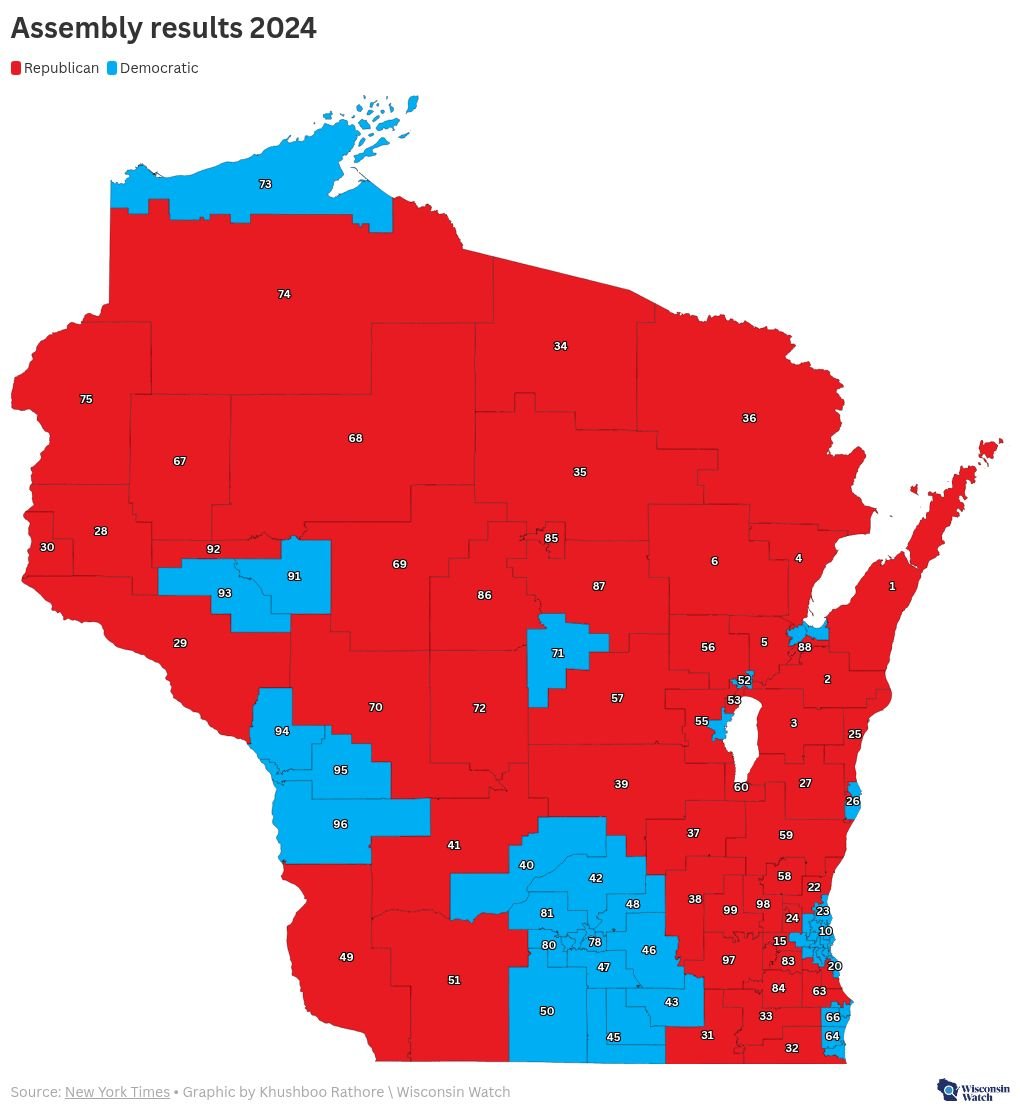
State legislature election results in Wisconsin are critical because they determine control over state laws, budgets, and redistricting decisions. In 2024, all 99 State Assembly seats were contested, making it one of the most important state-level elections in the country.
The final outcome showed Republicans retaining a majority in the Assembly, although Democrats gained several seats compared to previous elections. This shift reflected changing political dynamics following redistricting and increased competitiveness in suburban districts, where voter preferences have become less predictable in recent cycles. (Wikipedia)
County-Level Voting Patterns and Regional Differences
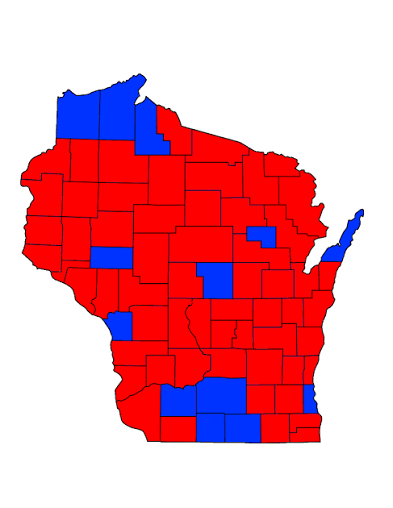
County-level Wisconsin election results reveal a strong and consistent divide between urban and rural voting behavior. Counties like Milwaukee and Dane regularly produce large Democratic margins, while many rural northern and western counties strongly support Republican candidates.
Suburban counties are the most influential swing regions in the state. These areas often shift between parties depending on national political trends, candidate appeal, and local economic conditions. Because Wisconsin elections are often decided by very small statewide margins, performance in these counties can determine the final outcome of statewide races.
Voter Turnout Trends and Election Participation in Wisconsin
Voter turnout in Wisconsin remains consistently high, especially during presidential election years. In 2024, turnout reached millions of voters statewide, reflecting strong political engagement and the importance of Wisconsin in national elections. High turnout is often driven by the competitiveness of races and extensive campaign activity.
Early voting and absentee ballots continue to play a growing role in Wisconsin election results. Many voters choose these methods due to convenience, and election officials process them alongside in-person votes during the counting period. This system contributes to the gradual reporting of results after Election Day, rather than immediate final totals.
Key Factors That Shape Wisconsin Election Results
Several factors consistently influence Wisconsin election results, including demographic patterns, economic concerns, and voter turnout differences across regions. The urban-rural divide remains one of the strongest predictors of voting behavior, with cities leaning Democratic and rural areas leaning Republican.
Redistricting also plays a major role in shaping legislative outcomes. Changes in district boundaries can significantly affect which party has an advantage in the State Assembly and congressional races. Additionally, issues such as healthcare, agriculture, manufacturing jobs, and education often influence voter decisions more strongly in Wisconsin than national party messaging alone.
Conclusion: Why Wisconsin Election Results Continue to Shape U.S. Politics
Wisconsin election results remain a defining feature of American electoral politics because the state consistently delivers extremely close and competitive outcomes. Whether in presidential elections, Senate races, or state legislative contests, Wisconsin often acts as a tipping point that influences national direction.
The 2024 election cycle once again demonstrated the state’s political balance, high voter engagement, and deep regional divisions. As long as these patterns continue, Wisconsin will remain one of the most important and closely watched states in the United States, where every election cycle carries national significance.
